- Solomon's Circle
- Posts
- Living Free as Bondservants
Living Free as Bondservants
BRI vs. ESG; Quantum Computing; Pomegranate

Solomon's Circle
November 13, 2025
Devotional
Living Free as Bondservants
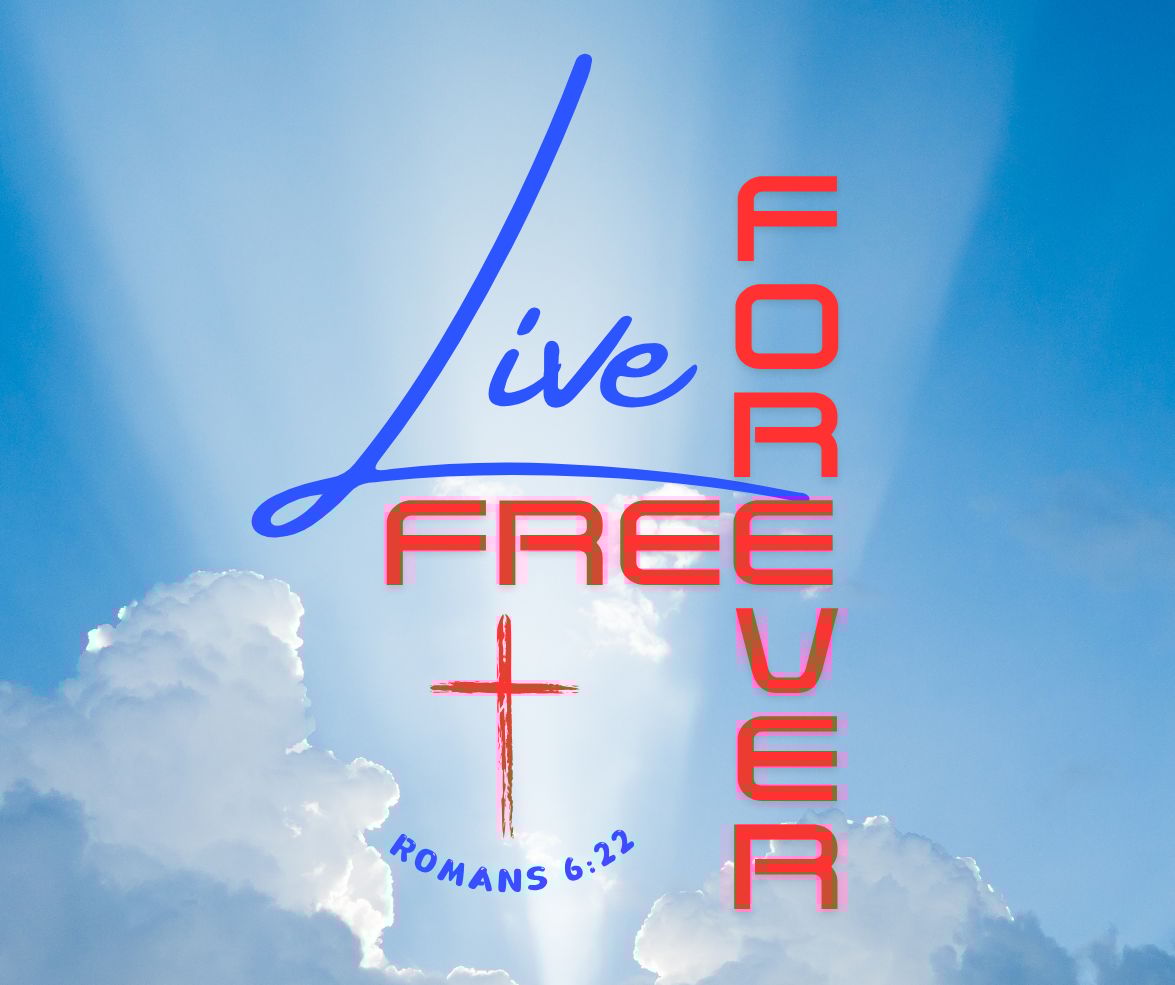
I was inspired to create the visual above showing the intersecting words, ‘Live Free Forever’, as representing our lives as Christ followers. I then asked the Lord to give me a scripture to back it up, and Romans 6:22 was given:
“But now you are FREE from the power of sin. You have become a servant for God. Your life is set apart for God-like living. The end is life that lasts FOREVER.”
The verse at its core tells us that by surrendering our life to Jesus we can be set free from sin and inherit eternal life. What’s interesting is the term becoming a ‘servant for God’, or in other translations being a ‘slave of God’.
How odd you might think, until we understand that in New Testament times, a ‘slave’ was not always viewed in a negative context as today. In fact, people that paid off their debt through servitude as slaves, could afterward willingly request to become a ‘bondservant’ to their master. Why you might ask? Because their master treated them well and provided for all their needs, they then chose to continue serving him.
In this context, we see the privilege we have as Christ followers to become slaves or bondservants to God. So we choose to have a life ‘set apart for God-like (righteous) living’, as Paul described. The result is not a life of timidity, but the opposite. We live boldly for Christ because we chose to serve the King of Kings and Lord of Lords!
Recommended Reading:
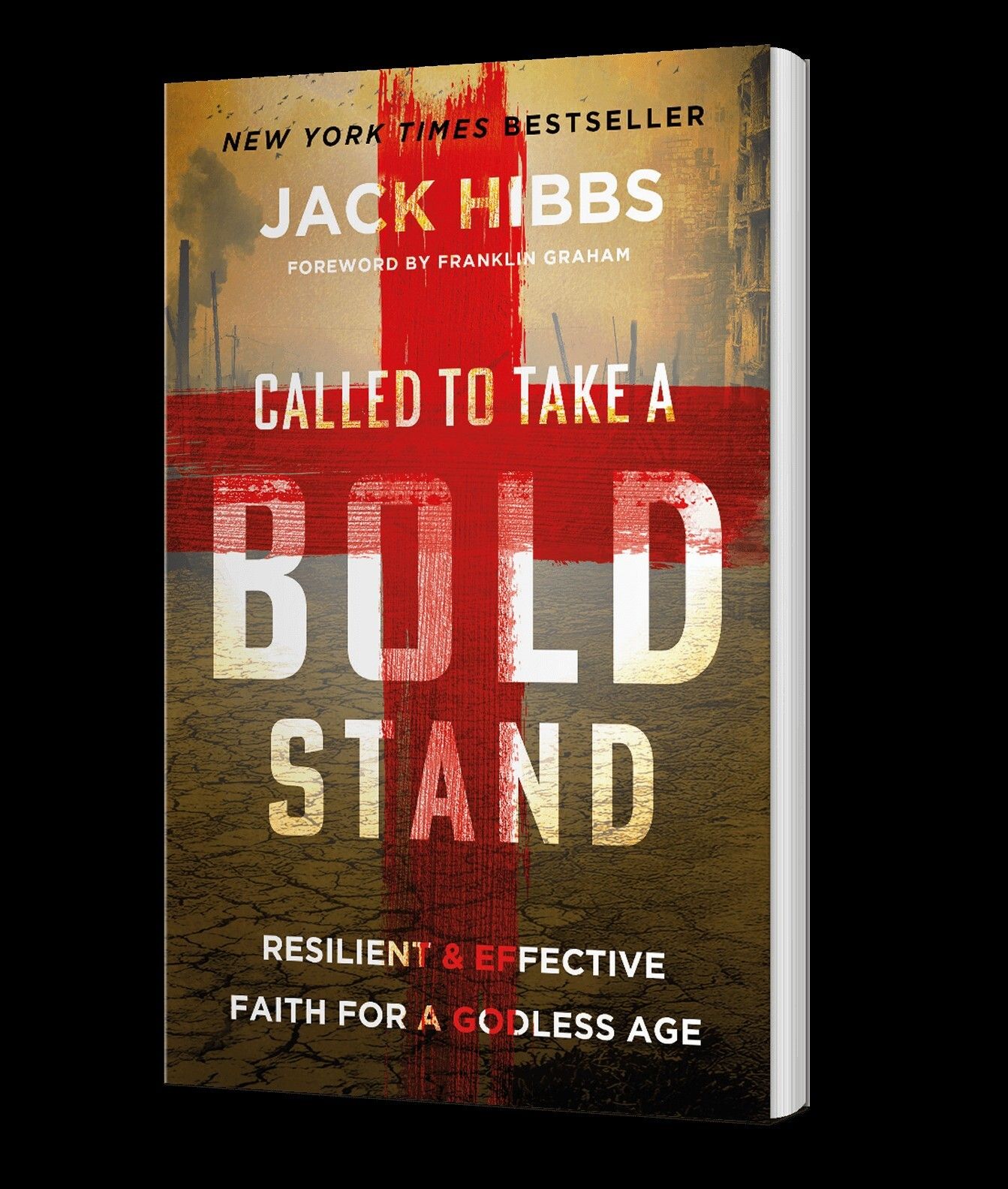
Living free as a bondservant for Christ requires for us to live boldly for Him. I started reading this new book from Jack Hibbs' entitled ‘Called to Take a Bold Stand’, which I highly recommend:
Financial Update
BRI vs. ESG
As Christians, the acronym may be new to some of us, but the concept certainly isn't.
BRI, or “Biblical Responsible Investing,” is the Christian version of “ESG” (Environmental, Social, and Governance) - a term, like most “woke” terms, started with good intentions, then quickly turned left.
What is Biblical Responsible Investing?
Biblical Responsible Investing is an approach to investing that aligns financial decisions with Godly biblical principles and values.
It operates on the foundational belief that believers are stewards — not owners —of God's resources, and therefore must manage investments in ways that honor Him.
BRI typically involves negative screening, avoiding investments in companies or industries that conflict with biblical teachings.
This includes businesses involved in abortion services, pornography, gambling, alcohol, and companies that exploit workers or violate human dignity.
Equally important is positive screening: actively seeking companies that operate with integrity, treat employees fairly, practice environmental stewardship as creation care, and contribute positively to their communities
Understanding ESG Investing
ESG investing evaluates companies based on environmental impact, social responsibility, and governance practices. It considers factors like carbon emissions, diversity initiatives, labor practices, and corporate leadership structures.
ESG has gained mainstream popularity as investors increasingly want their portfolios to reflect certain values while still seeking competitive returns.
Key Differences: Foundation and Authority
The most fundamental difference between BRI and ESG lies in their source of authority. BRI is anchored in Scripture as the unchanging standard for right and wrong.
Christian investors look to God's Word as the ultimate authority for determining which investments honor Him.
ESG, by contrast, is rooted in evolving societal values and secular ethical frameworks that shift with cultural trends and political movements.
This difference matters profoundly. ESG criteria are determined by rating agencies, asset managers, and cultural consensus—sources that can redefine priorities over time.
What qualifies as "socially responsible" under ESG today may look entirely different in a decade. Biblical principles, however, remain constant across generations.
"The Lord God took the man and put him in the Garden of Eden to work it and take care of it."
Different Priorities, Different Outcomes
The practical implications of these different foundations become clear when examining specific issues. On the sanctity of life, BRI explicitly avoids companies involved in abortion services or products, viewing this as a non-negotiable biblical conviction.
ESG frameworks, however, often promote abortion access as part of "social responsibility" or employee healthcare benefits, directly contradicting Christian values.
Similarly, while both approaches may value human dignity, they define it differently. BRI grounds human worth in the biblical teaching that all people are created in God's image.
Why BRI Resonates with Christian Investors
For believers, BRI offers something ESG cannot: investment decisions grounded in eternal truth rather than temporal trends.
It recognizes that faithfulness to God matters more than cultural approval. While ESG asks "What does society currently deem responsible?", BRI asks "What does God's Word say is right?"
This doesn't mean Christians should ignore environmental stewardship or fair labor practices—biblical principles certainly support both.
Rather, it means these concerns must be evaluated through a biblical lens, not adopted wholesale from secular frameworks that may smuggle in values contrary to Scripture.
Biblical Responsible Investing allows Christians to be faithful stewards who honor God with every financial decision, ensuring their investments build God's kingdom rather than undermine it.
Tech Update
Quantum Computing
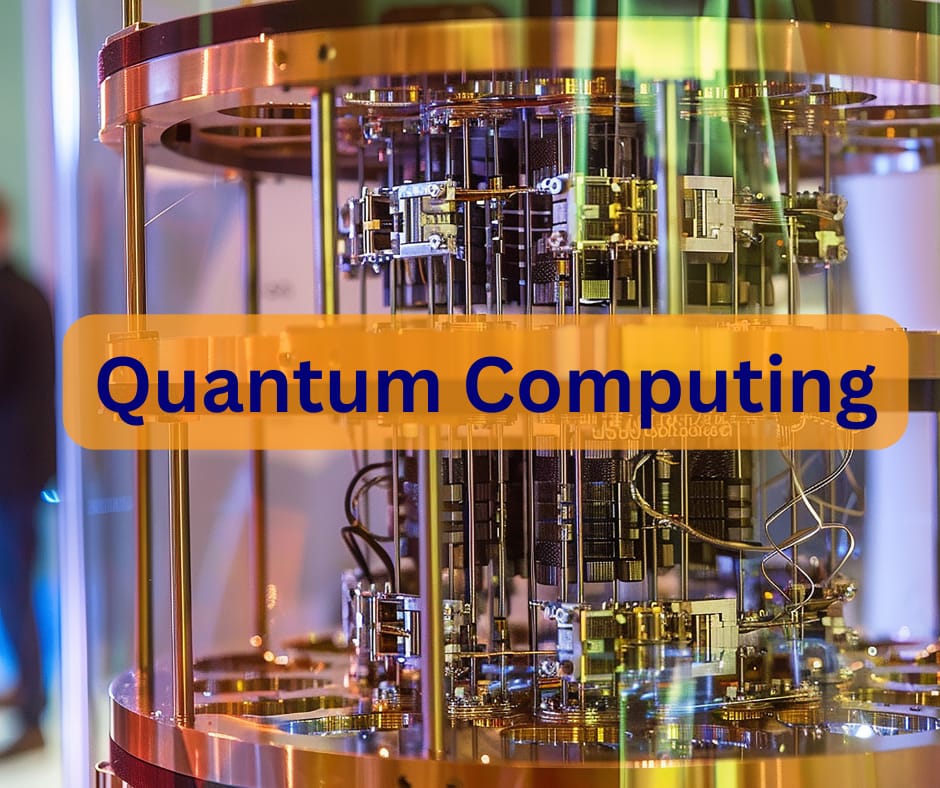
There has been a lot of buzz in the news lately about quantum computing (QC), including the U.S. Department of Energy, announcing $625 million in funding to renew its five National Quantum Information Science (QIS) Research Centers. I thought a quick overview of QCs and its relevance would be valuable for our community.
What are Quantum Computers?
Traditional computers use bits that operate in a binary ‘0’ or ‘1’ state to process information. QCs operate in the field of quantum mechanics - think sub atomic particles - where quantum bits (qubits) can have multiple states at once. This allows the QC to perform vast amounts of computations much faster than a traditional computer. We are talking in the order of millions to billions times faster! In one experiment, a QC performed a task in 6 seconds that would have taken 47 years for a supercomputer to complete!
Complex and Costly
As nice as this sounds, the technology is complex and requires extreme conditions to operate. For example, QCs need to be extremely cold to function properly, typically running at temperatures close to absolute zero - about 10 millikelvins, which is -273°C (-460°F) - we’re talking colder than deep space!
As a result of their complex nature, these specialized systems cost between $7-15M each. It is estimated that there are less than 200 QCs in operation today globally, being used for specialized applications like pharmaceutical research, cryptography, and AI/machine learning. With the recent surge in the AI arms race, the latter application is obviously a key driver behind QCs.
The Players
Pure-play QC companies like IBM, IonQ, Rigetti Computing, D-Wave, and Quantinuum, focus directly on building and commercializing quantum hardware and software. In addition, all the large tech giants, including Microsoft, Google (Alphabet) and Nvidia combine quantum research with broader tech products and cloud services.
QC is certainly in its infancy stage today but will continue to gain traction in the decade ahead.
As fascinating as quantum computing is, I’m reminded that God has uniquely orchestrated every sub atomic particle in the universe to operate as per His design. Yet, even this will be restored when He unveils the new heaven and new earth.
“... You ought to live holy and godly lives as you look forward to the day of God and speed its coming. That day will bring about the destruction of the heavens by fire, and the elements will melt in the heat.”
Health Nuggets
Pomegranate

Fun fact – did you know that a pomegranate has an average of 613 seeds, which is the number of laws in the Old Testament?
Those seeds contain strong anti-inflammatory, antioxidant, anti-obesity, and anti-tumor properties. They are also a great source of polyphenols that provide anti-inflammatory effects on cells in the body – promoting heart health, brain health (memory retention), skin/teeth/hair improvement, gut health, blood sugar control, muscle recovery, immune support, kidney function as well as digestive health. (Consult your physician before consuming pomegranate if you are on blood thinners or similar medications.)
With the Holiday season upon us, include this vibrant red color to your dishes by adding pomegranate to your salads, couscous and brussels sprouts dishes, pomegranate juice and of course desserts. The seeds add a jewel-like freshness and a burst of flavor, enhancing both sweet and savory dishes. HAPPY HOLIDAYS!
When they reached the Valley of Eshkol, they cut off a branch bearing a single cluster of grapes. Two of them carried it on a pole between them, along with some pomegranates and figs.”
Note: Health Nuggets are opinions and not medical advice.
Trivia Corner
Test your wisdom and knowledge of the Bible.
The word "love" is most concentrated and mentioned 46 times in this book in the bible, or an average 1 in every 50 words: |
Prayer & Praise Corner
Have a Prayer Need or Praise Report?
We believe God meets our needs, beyond what we ask or image through Holy Spirit working in and through us.
We would love to join with you in prayer or hear your testimony of what God has done for you.
Subscribe for free and Share with Friends
Join a vibrant community of Christians pursuing God’s wisdom for life and business. Receive Solomon’s Circle newsletter directly to your inbox weekly:
Take Care and God Bless!
Solomon’s Circle
Reply