- Solomon's Circle
- Posts
- Fresh Bread
Fresh Bread
Greenland: Deeper Than Real Estate; Silver Technology Drivers; Health Benefits of Selenium

Solomon's Circle
January 29, 2026
Devotional
Fresh Bread

Have you ever smelled fresh baked bread? Better yet, have you ever tasted it just after it came from the oven, and ate it with butter melting into it and into your mouth?
I've been recently blessed to be the recipient of fresh bread, as my wife has been perfecting her bread baking using her new Swedish kitchen machine. I’m thinking, if manna tasted anything like this, sign me up for 40 years!
As much as fresh bread satisfies the senses, how much more fulfilling is fresh daily Living Bread. Jesus declared that He is the “Bread of Life”, the ultimate source of eternal satisfaction.
I have learned to appreciate the importance of receiving His Bread daily, as I consider the red letters of my Bible as morsels of fresh bread. His words can fill, satisfy, nourish, and strengthen me daily…. but only if I take, eat, and savor it. I have also gotten into the habit of reading the red letters out loud, which helps sharpen my attention and open my spiritual senses.
While there is benefit in listening to a Christian video teaching or podcast with solid Biblical content, it’s only like eating day-old bread.
Let’s go to the source of living Bread, Jesus, for fresh insight, revelation and instruction for living each and every day. Savor His words in your soul and let your spiritual senses come alive.
Financial Update
Greenland: Why America's Interest Goes Deeper Than Real Estate

When President Trump first mentioned the idea of purchasing Greenland back in 2019, many wrote it off as political theater.
Fast forward to 2026 - And well, here we are...
Greenland isn't just about adding territory to a map. It's about national security, economic independence, and America's position in a world that's shifting faster than most of us realize.
Why Greenland Actually Matters
Greenland sits right along what's called the GIUK Gap - a strategic point in the Arctic that covers Greenland, Iceland, and the United Kingdom. This spot is critical for keeping an eye on both Russia's and China’s military movements in the Arctic, and both countries have made it clear that the Arctic is a top priority for them.
But what's underneath all that ice is even more significant. Greenland ranks eighth in the world for rare earth reserves, sitting on about 1.5 million tons. These minerals are essential for everything from smartphones to electric vehicles to advanced military technology.
Right now, China controls roughly 70% of global rare earth production. That's a problem when you're trying to compete economically and maintain national security.
This Isn't Actually New
America's been eyeing Greenland for a long time. Back in 1867, Secretary of State William Seward tried to buy it for $5.5 million - about $125 million in today's money.
During World War II, hundreds of American soldiers were stationed there protecting critical mineral operations needed for building airplanes.
Even today, the U.S. runs Pituffik Space Base in Greenland, which has been a key part of our missile defense system since World War II.
”Father, grant me the wisdom to know which steps to take and which to avoid"
Where Things Stand Now
Earlier this year, President Trump announced he reached a "framework of a future deal" on Greenland with NATO Secretary-General Mark Rutte. The details are still vague, but discussions include giving the U.S. "total access" to parts of Greenland for an unlimited timeframe, including updates to the 1951 agreement to ensure access continues even if Greenland gains independence from Denmark.
What This Could Mean for Us
If this works out, we'd secure access to critical minerals without competing with China for them, strengthen our Arctic defenses, and position ourselves as the dominant Arctic power.
However, it’s reported that about 85% of Greenlanders oppose an American takeover, and both Greenlandic and Danish authorities have said Greenland isn't for sale.
As people of faith who believe we're called to be good stewards of what God has entrusted to us - including our national resources and security - we need to approach this with wisdom.
The question isn't just whether America can get more control over Greenland. It's whether we should, and how we go about it matters just as much as the outcome.
Tech Update
Silver Demand Technology Drivers
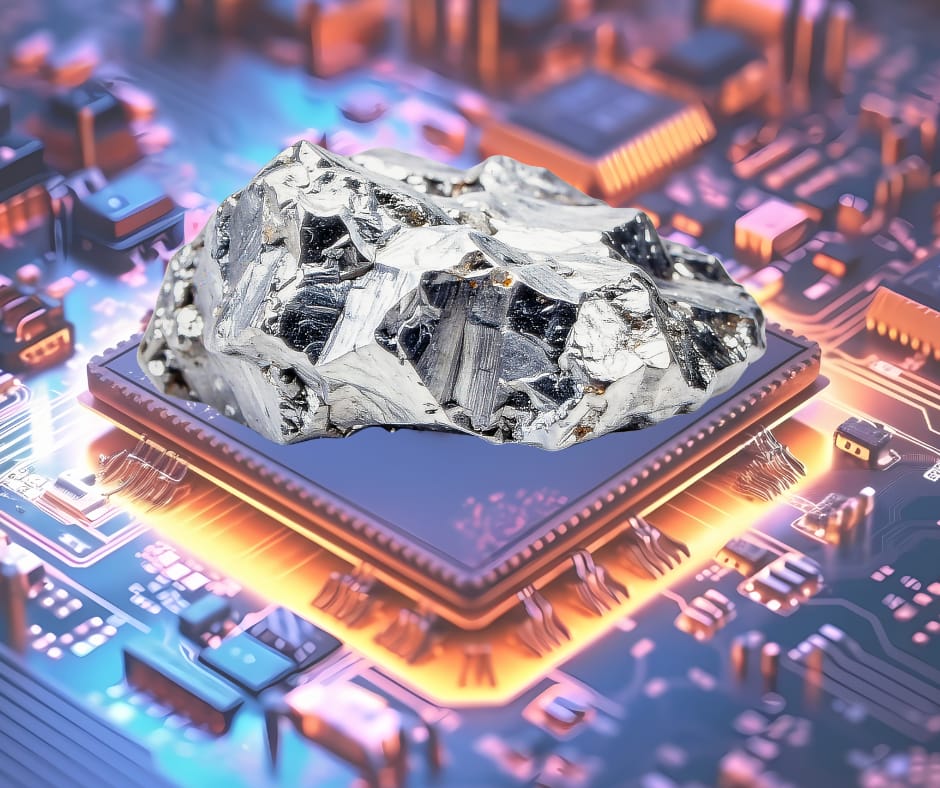
In a previous article we covered ‘Silver in the Bible’ to share the value that this precious metal has had since the beginning of recorded history. Even if you are not an investor, the news has caught up to the fact that the price of silver has more than doubled in the last year. So what is driving this demand? Many factors exist from economic to geopolitical, but let's look at the technology drivers behind silver.
The top tech demand drivers for silver are in several high growth areas, including:
Solar photovoltaics (PV): These are the components that convert sunlight into power used in solar panels. This is the single largest growth driver which is projected to more than double by 2030 or around half of current annual mine output.
Electronics & AI/data centers: You are already aware of the vast growth in AI data centers as we covered in this article last year. In addition, silver is used in electronic circuit boards, contacts, solders, and high‑performance components.
Electric vehicles (EVs) & charging: Each EV uses significantly more silver than an internal‑combustion car. In addition, so do the fast‑charging stations and emerging solid‑state batteries.
5G and communications: Silver is used for electromagnetic shielding and high‑frequency components in the current 5th generation wireless buildout well underway globally.
Medical and antimicrobial uses: An area often overlooked, but silver is also incorporated into wound dressings, medical devices, coatings, textiles, and water purification for its antimicrobial properties.
Industrial demand for silver alone was around 680 million ounces in 2024, which was about 60% of total demand. Since then, mining production has been about the same while demand continues to grow.
“Receive my instruction, and not silver; And knowledge rather than choice gold.”
Health Nuggets
Health Benefits of Selenium
What is Selenium?
It’s an essential trace mineral derived from good soil, water and plants. It has become popular for its antioxidant ability to slow down premature aging and the progression of disease such as heart and thyroid problems, cancer and even dandruff.
Following absorption, selenium is incorporated into proteins such as enzymes (selenoproteins). Selenoproteins are a family of proteins that constrain selenium in the form of an amino acid and their activity is dependent on an adequate supply of selenium in the diet.
Selenium Benefits
Cell protection: Selenium is used to produce enzymes which work as antioxidants to protect cells and DNA against free-radical damage. If left unchecked, this damage can accelerate the aging process and lead to the development of cell mutation and diseases. 200mg/day is recommended for effective antioxidant protection.
Heart disease: The mineral helps to fight inflammation and acts as a blood thinner to prevent the build-up of fatty plaques along artery walls and reduce the risk of blood clots. (Consult with your physician if you are already taking a blood thinner).
Inflammation: Selenium helps to regulate the production of prostaglandins and may reduce inflammation throughout the body.
Immunity: Selenium is required for the proper functioning of the immune system. It helps to stimulate the activities of white blood cells (antibodies) and fend off infections and viruses.
Fertility: Selenium is important for both male and female fertility. It protects the eggs and sperm against chromosomal damage which can increase the risk of miscarriage and birth defects. Low sperm counts are often associated with low levels of certain minerals, including selenium, iron and zinc.
Cancer: It is thought that selenium enhances the way the body responds to cancerous activity by inducing apoptosis and triggering the death of cancerous cells without harming healthy cells. Large studies have examined a possible link between low selenium levels and higher incidences of prostate cancer, lung cancer and bladder cancer. People with higher selenium intakes had a 31% lower rate of cancer, compared to those with the lowest intakes, as per the Cochrane Review in 2011.
Thyroid functions: There is a clear link between low selenium levels and impaired thyroid metabolism. Selenium is highly concentrated in the thyroid gland where it acts as catalyst for the production and metabolism of thyroid hormones. When selenium levels are low, the thyroid gland has to work harder to produce hormones, and the body has a harder time converting these hormones into cells it can use. It also helps the body to recycle iodine, which is well known to support thyroid function.
Cataracts: It is thought that the antioxidant behavior of selenium also helps to reduce free-radical damage in the eyes and low blood levels of selenium are often found in those with cataracts. However, research is still ongoing to find out if increasing dietary intake of selenium could reduce the risk of cataracts.
Hair growth: Selenium helps the body to use proteins, including those that make up the hair, which is why low selenium levels are often associated with hair loss. Selenium is toxic to the scalp fungus that causes dandruff so is often a key ingredient in anti-dandruff shampoos.
Skin conditions: Its antioxidant ability to defend against oxidative damage helps to slow the aging process. It also assists in the recovery of tissues in the skin, which may offer some relief from itching and swelling associated with common skin conditions such as psoriasis and eczema.
Sources of Selenium
Our bodies cannot make selenium so it needs to be consumed through dietary sources such as in animal products which are converted and used in the body. In some plants, up to 50% of selenium content may be in the form of selenate (leaves of beets and cabbage, and garlic).
Good selenium foods include nuts - especially Brazil nuts, tuna, sardines, meats (organs) and poultry, mushrooms - particularly shiitake or white button varieties, fresh organic broccoli, cabbage, spinach, Brewer’s yeast and wheat germ.
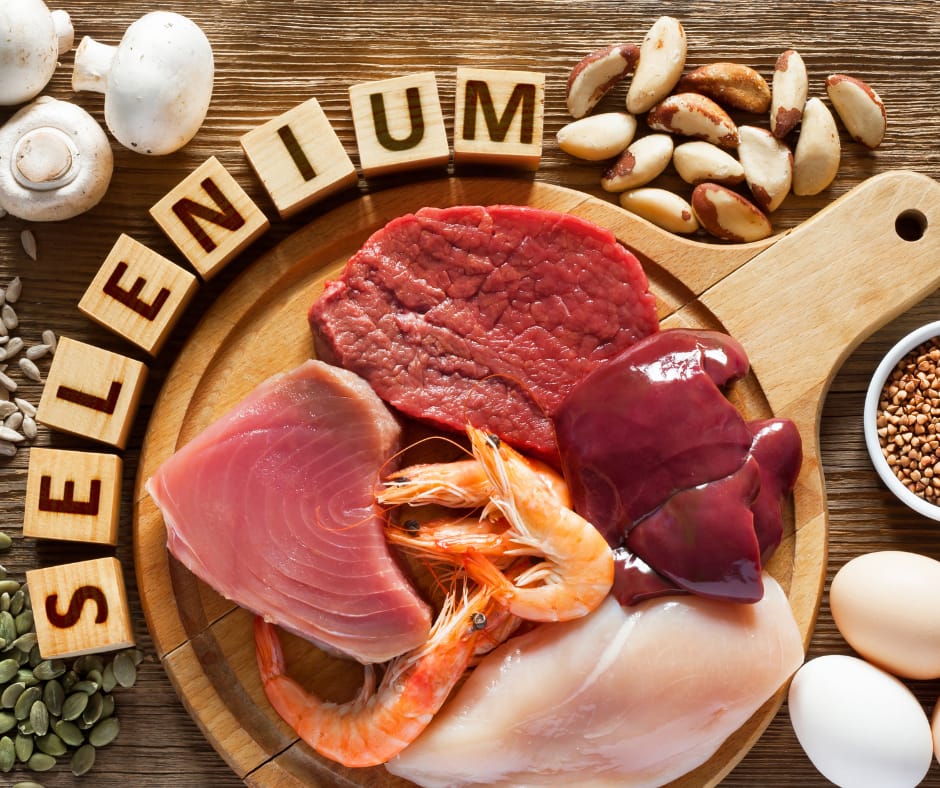
When the body has low levels of selenium, it uses its stores for essential processes, while other non-essential processes go without. The first signs of a selenium deficiency often include: muscle weakness, fatigue, whitening of the beds of the fingernails, discoloration of the hair or skin, poor growth, infertility, premature aging, dandruff and thyroid problems.
How Much Should I Take?
The recommended daily allowance for selenium is 75mcg for men and 60mcg for women. However, if you are one of the “at risk” groups mentioned above, you may need higher intakes to cover losses from the diet. 200mcg per day appears safe for long-term use, while dosages as high as 700mcg a day are safe for short-term use. It is best to take selenium supplements in combination with food and vitamin E because they facilitate each other’s absorption. Many supplements will combine the two.
If you like Brazilian nuts, which are high in selenium, magnesium and copper, take one to two a day! They are also high in fat, so stick to one to two a day ;>).
Caution: Selenium also has mild blood thinning properties, which may increase the risk of bleeding when taken with anticoagulants such as warfarin or aspirin. Check with your GP if you are taking any prescription medications.
“The earth is the Lord’s, and everything in it, the world, and all who live in it;”
Note: Health Nuggets are opinions and not medical advice.
Trivia Corner
Test your wisdom and knowledge of the Bible.
This quote is found in which book of the Bible: “Though your sins are like scarlet, they shall be as white as snow” |
Subscribe for free and Share with Friends
Join a vibrant community of Christians pursuing God’s wisdom for life and business. Receive Solomon’s Circle newsletter directly to your inbox weekly:
Take Care and God Bless!
Solomon’s Circle
Reply